SAMLAND CO., LTD



Proposal to Retain 5% of Home Purchase Price Until Ownership Certificate Is Issued
Retaining 5% to Protect Homebuyers’ Rights
Under the latest draft amendment to the Law on Real Estate Business, the Ministry of Construction has proposed introducing a safeguard mechanism for the remaining 5% of the contract value for the purchase of off-plan houses and construction works.
Under the proposal, payments for home purchases would continue to be made in installments based on construction progress. The first payment, including the deposit, must not exceed 30% of the contract value. Subsequent payments must correspond with construction progress, while the total amount collected by the developer before handover must not exceed 70% of the contract value.
After handover, if the buyer has not yet been issued a Certificate of Land Use Rights and Ownership of Assets Attached to Land (commonly referred to as the “Pink Book”), the developer may not collect more than 95% of the contract value.
A notable change concerns the remaining 5% of the contract value. Instead of leaving this amount as a direct payment obligation between the buyer and the developer, the draft proposes that the 5% be deposited into a payment security account opened at a credit institution or a foreign bank branch legally operating in Vietnam.
The account opening process, management method, and related arrangements would be agreed upon by the parties in the contract. The bank would transfer the funds to the developer only after the buyer has been issued the ownership certificate by the competent state authority.
In particular, if the ownership certificate cannot be issued due to the developer’s fault, the buyer would be entitled to recover the funds held in the security account.
The mechanism is expected to provide an additional safeguard for homebuyers. In practice, after taking possession of their homes and paying most of the purchase price, buyers may still have to wait a considerable amount of time for the ownership certification process to be completed.
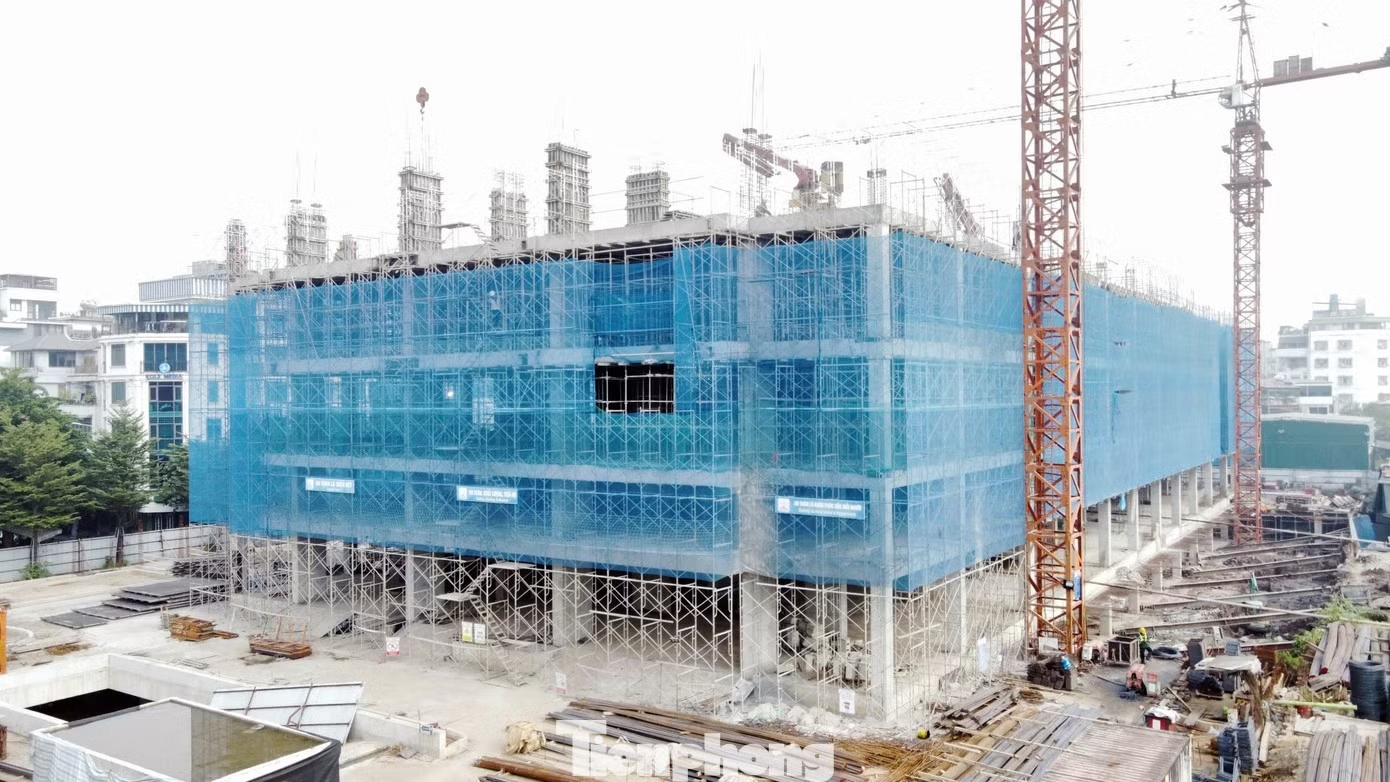
The Ministry of Construction has proposed placing 5% of the value of off-plan properties into a security account.
Speaking to Tien Phong, Pham Thi Mien, Deputy Director of the Vietnam Institute for Real Estate Market Research and Evaluation (VARS IRE), said that some developers have been slow to complete and submit applications for ownership certificates on behalf of buyers.
As a result, many customers have taken possession of their homes but have still not received their ownership certificates after a prolonged period. According to Ms. Mien, such delays directly affect buyers’ legitimate rights and interests, particularly their ability to establish full legal ownership of their properties.
Without an ownership certificate, buyers may also encounter difficulties when seeking to mortgage the property for financing or transfer ownership.
Clearer Responsibilities for Issuing Ownership Certificates Are Needed
Compared with the current regulations, the Ministry of Construction’s new proposal would significantly change the mechanism for securing the final 5% payment.
Under the 2023 Law on Real Estate Business, if a buyer has not yet been issued an ownership certificate, the developer may not collect more than 95% of the contract value. The remaining 5% is payable once the competent state authority issues the certificate to the buyer.
Under the new proposal, however, the remaining 5% would instead be deposited into a bank security account. This would separate the final payment from the developer’s operating cash flow while providing an additional incentive for the developer to fulfill its legal obligations relating to the project and the buyer.
According to Ms. Pham Thi Mien, in addition to retaining 5% of the contract value, the law should provide more specific regulations regarding the responsibilities of all parties involved in the ownership certification process.

Pham Thi Mien
Relevant authorities should clearly specify the deadline for developers to complete and submit ownership certificate applications for buyers, as well as the rights and obligations of the parties involved in the transaction and the responsibilities of competent state authorities. Specific sanctions for violations, compensation for damages, and other legal liabilities should also be established. Exemptions from liability should likewise be clearly defined to minimize disputes between buyers and developers.
Therefore, placing 5% of the contract value in a bank security account is only one part of the mechanism required to protect homebuyers. Without clear deadlines, procedures, and responsibilities for completing ownership certification, buyers could still face prolonged delays in establishing legal ownership even though part of their payment is being retained.
In its comments on the draft amendment to the Law on Real Estate Business, the Vietnam National Real Estate Association (VNREA) also suggested taking into account cases where buyers voluntarily carry out the ownership certification procedures themselves.
According to VNREA, in practice, some customers independently apply for their ownership certificates, which can make it difficult for developers to collect the final 5% of the contract value. VNREA therefore proposed that where a buyer voluntarily undertakes the ownership certification procedure, the buyer should be required to pay the remaining 5% to the developer once the decision to independently carry out the procedure is confirmed.
Other Posts
Nearly VND 4.6 Trillion Proposed to Ease Chronic Traffic Congestion on a Major Ho Chi Minh City Road